
‘Yellow Lights’ Stop Lighting: XJTLU Campus Emergency Call System has been out of service for over one month
By Ivy Jiahui Huang, April 27, 2018
It was a rainy Friday night. Jinsong Li fell down on the slippery floors when he came out of the Design Building (DB) on the south campus. Rain dropped on him, he could not walk. The ‘Yellow Light’, an emergency call station located in the campus, caught his eyes. He immediately pressed the SOS button on the emergency call station, waiting. No one replied. The lights on the camera lit up his face, but the campus emergency call system, so-called ‘Yellow Light’ system, did not seem to work at all. Jinsong has been on crutches since he broke his legs then.
The ‘Yellow Light’ near DB is not the only out of service station. In fact, our journalist checked every campus emergency call station in Xi’an Jiaotong- Liverpool University (XJTLU), pressing the button of all them. X-Mirror found out that all of the six emergency pillars have been out of service for more than a month.
“I found the central computer came across some problems in control room on March 26, when it was my turn to inspect the campus emergency call system,” said Senmao Wang, an officer in the Property Management Office on South Campus. He told Management Information Technology and System Office as soon as he noticed the problem. According to Tao, the team leader of facility and safety management at the Campus Management Office, our university has a contract with the manufacturer. “We could sue them for delayed repair, but it is understandable since they have to spend time on buying the materials.” As Tao claimed, the system could be fixed usually in two weeks, but this case is special because the South Campus is under construction, which may affect the underground cable runs.
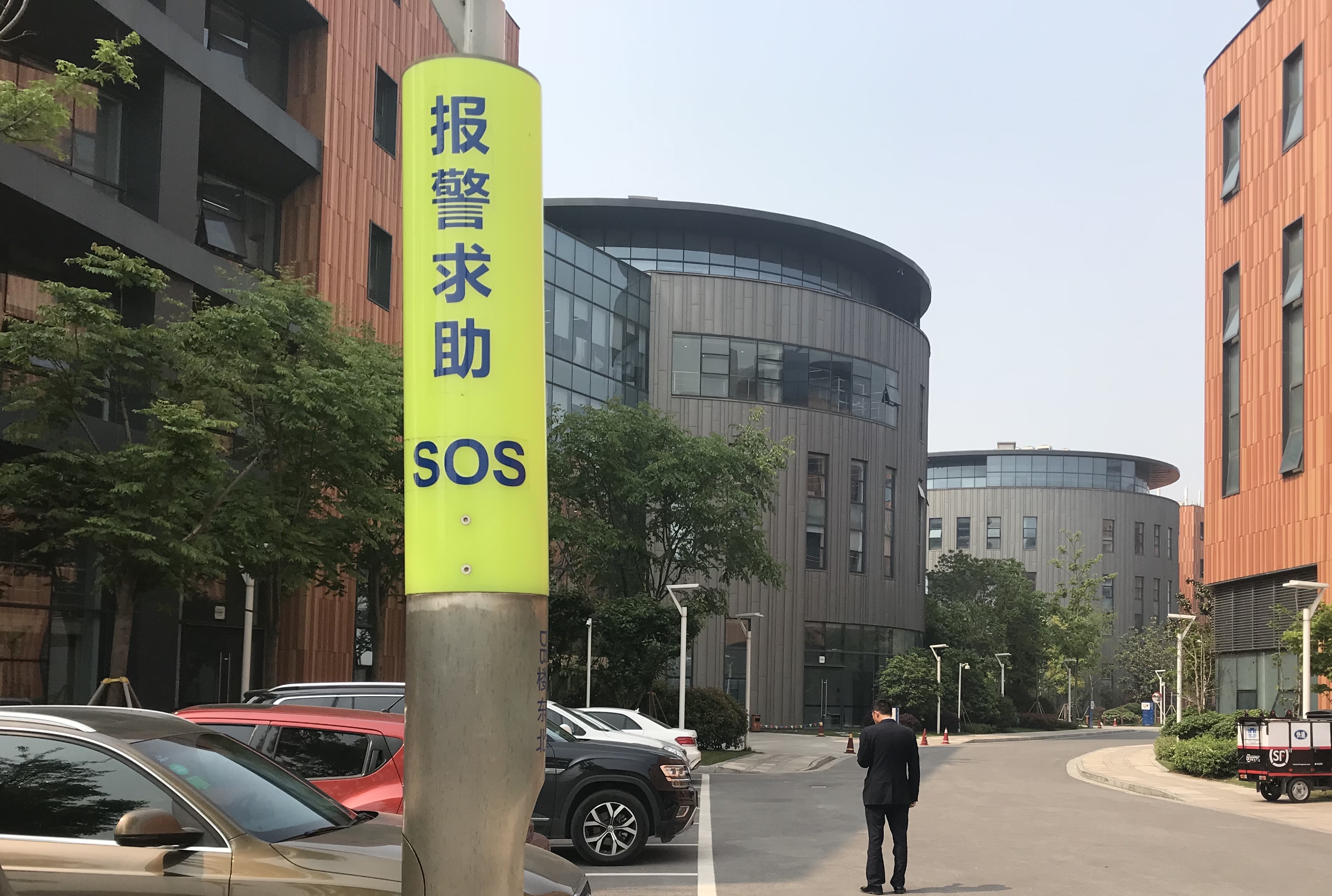
Unstable inspection or maintenance of the system
The campus emergency call system costs about 200,000 yuan to construct while it has almost no costs for maintenance, according to ‘Walker’, the project manager of facility development team at the Campus Management Office. ‘Walker’ added: “There are only six campus emergency call stations currently, so the university didn’t have a fund for the manufacturer’s workers to maintain it regularly. Currently, it mainly relies on the staffs in Property Management Office. Their labour cost is not a big deal, we can almost ignore it,” ‘Walker’ said. The officers in Property Management Office feel obliged to inspect the system. “We won’t get paid extra for this inspection, it’s part of our job,” said Wang, the officer at Property Management Office. The Campus Management Office checks it as well. In terms of the responsibility, Tao said: “both the Property Management Office and we are responsible for the regular inspection of this emergency call system. Ideally, our officers should check it every day. However, in reality, only half of us would check it on the way to the Cafeteria on South Campus. It is because of the human resource issue.” There are 18 officers in Campus Management Office currently. Students show their concern about the lack of alternatives to the campus emergency call system. “I’m worried about what we could do if we are in danger but this system doesn’t work,” Zhili Zhao, a year two student majoring in Marketing, who always remains studying in the south campus until 10 p.m., said. “This system gave me a sense of security especially when I walked alone at night on campus.” Tao understands their worries. “The emergency call system is not the only system that protects students. Actually, we have a combined prevention by personnel, by physical conditions and by technologies.” On the other hand, ‘Walker’ admitted there aren’t any alternatives for students now, “They have to run into the building if they are in danger, the safety guards can help them.”
A controversy over whether this system is useful or not does exist. According to Bian, the project manager at the Property Management Office, very few students have actually pressed the button since it was built in 2016. “Only two cases happened: one is due to the curiosity about the SOS button, the other is because of the loss of a laptop.” ‘Walker’, the project manager of facility development team at the Campus Management Office, said the ‘Yellow Light’ emergency call system originates from the ‘Blue Light’ in the United States. The primary purpose of the ‘Blue Light’ is to help students escape from crime. However, the Chinese government considers the crime rate as a national secret, so students cannot get access to this information.
Jin Gu, the Lab Health and Safety officer at the Health and Safety Affairs Office, said the officer who is in charge of the emergencies on campus is on maternity leave. According to her experience: “The most likely crime here is theft. I didn’t know our campus had an emergency call system. I suppose it would work well if some students were in danger, or if there were terrible weather conditions.” However, she believed in most cases, our students would choose to call the police directly, “Based on our notes, there aren’t any dangerous cases like stabbing. Students could use their phone.” Bian disagreed: “Although crimes were less likely to happen here, he believed that as long as a student can be protected by the system, it is worth keeping.” He doesn’t think people could judge if it is useful based on the rate of utilization. “Emergencies are not like the routine”, said Bian, “it’s like the elevator, we have to inspect it even if it works well. If you cannot use your phone, the SOS button could save your life.”
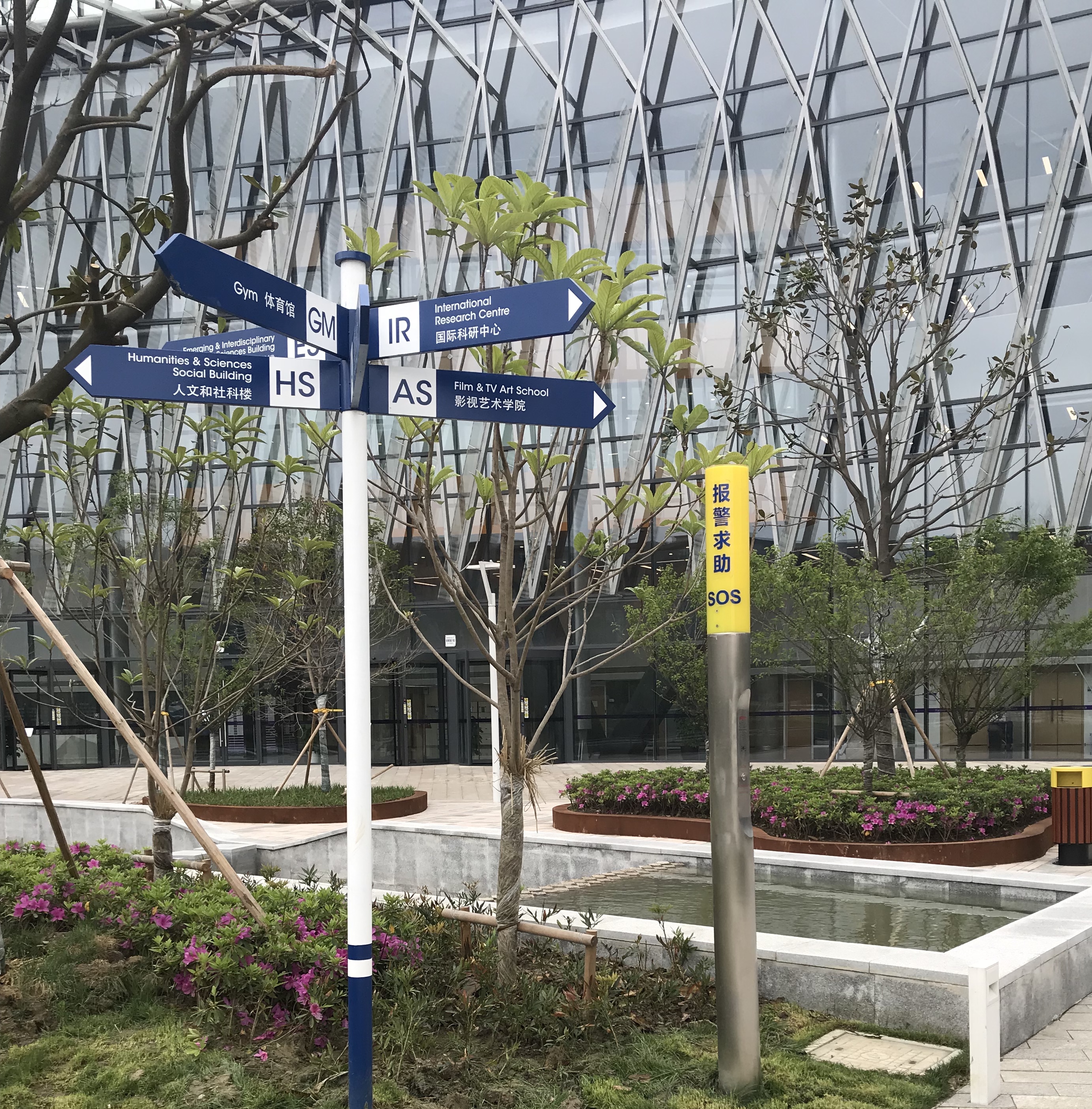
Lack of consideration for people with disabilities
Other concerns are raised especially for students with a disability. Xiyu Cai, a wheelchair user argued, “I cannot reach the SOS button on the emergency phone station from my wheelchair. But I’m not surprised, the infrastructures for people with disabilities in China is not so practical or useful. I get used to it.” He shook his head and smiled ruefully. According to the Student Charter of XJTLU: “At all times, the university will apply the same academic criteria to people with disabilities as to all other applicants and students, and will aim to equalize their opportunities by working towards a supportive and accessible environment.” ‘Walker’ stated that the infrastructures on campus for students with disabilities all obey the “Codes for Design on Accessibility of Urban Roads and Buildings”. It is an official document published by the China Academy of Building Research, the Ministry of Civil Affairs of the People’s Republic of China, and the China Disabled Persons’ Federation. He said: “However, although they don’t break the code, the infrastructures are not actually useful.” Cai showed his tolerance of this issue. “It is much better here in XJTLU compared with other places in China,” he said. Some new methods are advised to address this issue.
Zhao Wang, an associate professor in the Department of Electrical and Electronic Engineering, suggested it is possible to develop an app for wheelchair users to press the SOS button on their mobile phone. “It wouldn’t be a tough task and won’t take long. But how to protect their privacy? It is not a technical problem but an ethical question.”
 Jiahui Ivy Huang